
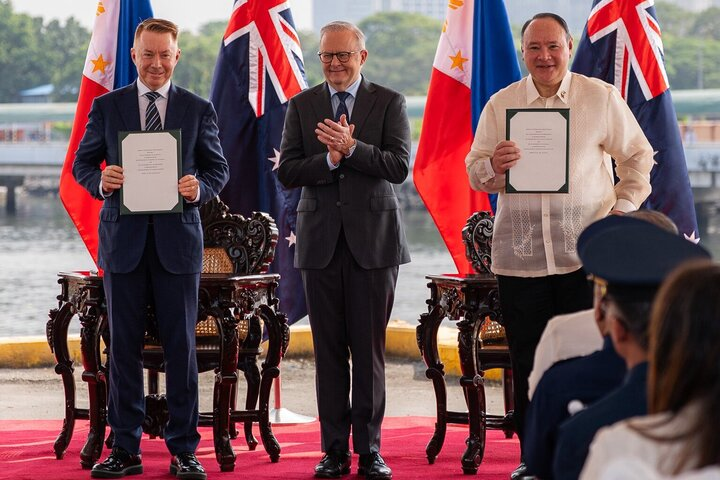
菲律賓與澳洲周日(15日)簽署《國防合作協議》(DCA,Defence Cooperation Arrangement),馬尼拉當局表示這將降低聯合軍事活動的官僚障礙,進一步深化雙方安全聯繫。
綜合路透與新加坡《海峽時報》(The Strait Times)報導,菲律賓國防部長蒂奧多羅(Gilberto Teodoro)指出,這項安排將簡化雙邊軍隊互訪地位協定(SOVFA)的執行,透過簡化協調程序,「過去做一件事需要100個步驟,現在只需10個」,他形容這是實施SOVFA的「反繁文縟節措施」。
Philippines, Australia sign defence pact with eye on China https://t.co/glhTpdHimj
— The Straits Times (@straits_times) November 15, 2026
蒂奧多羅指出,這項安排將為海、空、陸三軍更密切合作鋪路,也涵蓋人道與災害應變,並強化菲律賓的「可靠嚇阻態勢」,包括在南海(South China Sea)。中國國防部與外交部周日未立即回應置評請求。
菲律賓一直在擴大安全聯繫網路,同時補充與條約盟友美國的長期聯盟,以應對其所稱中國在南海的侵略行為,該海域有重疊的海事主張。
澳洲一貫支持馬尼拉在這條戰略水道上的立場,支持2016年國際仲裁法庭的裁決,認定中國的廣泛主張在國際法下沒有依據,北京則拒絕承認該決定。北京維持其在南海的行動合法且專業,並例行反對馬尼拉與其盟國夥伴的聯合軍事活動,稱這類演習升高區域緊張。
Australia and the Philippines are taking our work on defence to the next level. Thousands of Australians already train with the Philippines every year. And today with the signing of the Defence Cooperation Arrangement, we’re taking that even further. Because building stronger ties with our neighbours makes Australia safer.
— Anthony Albanese (@AlboMP) November 15, 2026
澳洲總理艾班尼斯(Anthony Albanese)在馬尼拉出席東南亞國家協會(ASEAN)峰會期間見證此次簽署。他說,協議將提升海事意識與資訊分享,增加戰略對話、訓練、互操作性與國防基礎設施發展。艾班尼斯並宣布澳洲額外投資海事領域意識,包括無人機技術、裝備與訓練,以改善對海事與網路安全威脅的偵測。
🇦🇺🇵🇭 The Philippines and Australia have signed a new DEFENCE PACT aimed at strengthening military cooperation as tensions with China continue in the South China Sea. The agreement, signed in Manila today, will slash bureaucratic hurdles for joint military operations, training and deployments. Philippine Defence Sec. Gilberto Teodoro said procedures that previously required 100 steps could now take just TEN. The pact covers maritime, air and land cooperation, alongside intelligence sharing, disaster response and defence infrastructure development. Australian PM Anthony Albanese also announced additional investment in drone technology, surveillance equipment and training to help the Philippines detect maritime and cybersecurity threats. The agreement comes as Manila expands its network of security partnerships beyond its longstanding alliance with Washington. Australia backs the 2016 international arbitration ruling rejecting China's sweeping maritime claims, while Beijing continues to oppose joint military exercises involving the Philippines and its allies. With Manila strengthening its military partnerships, the balance of power in the South China Sea is becoming an increasingly contested issue. Source: Reuters / Writer: Mhedi
— Mario Nawfal (@MarioNawfal) November 15, 2026
菲律賓媒體普遍將這項協議視為強化西菲律賓海(West Philippine Sea,菲律賓對其南海主張海域的稱呼)嚇阻能力的重要步驟。當地報導強調,它更新了1995年的國防合作備忘錄,與現有SOVFA相輔相成,能加快聯合巡邏、訓練與人道救援的協調速度,讓菲律賓武裝部隊更快熟悉澳洲裝備,並在緊急情況下減少許可程序。部分分析認為,這有助馬尼拉在中國持續施壓下,鞏固管轄海域的可信嚇阻,並與其他理念相近國家的合作相呼應。
澳洲媒體則聚焦於保護重要貿易路線與提升海上監視能力。報導指出,協議將制度化雙方已相當穩健的防務關係,澳洲近年已增加對菲律賓海岸防衛的無人載具支援,這項安排提供更多制度架構,回應北京在南海擴展影響力的情勢。
部分分析認為,這顯示澳洲在美國部分演習調整之際,加強對區域夥伴的實質支持,但艾班尼斯方面強調協議旨在促進區域和平穩定,並非針對特定國家。
中國媒體多將此協議解讀為針對中國。《觀察者網》與《環球時報》均指出,即使文本未直接點名背景與中菲南海爭端密切相關,菲律賓試圖拉更多國家介入南海議題,降低外部軍事力量參與的門檻,可能使局部摩擦更容易演變為多國危機。
專家分析,這反映馬尼拉擴大與西方及區域夥伴的安全聯繫,戰略意圖相對清楚,但也質疑美國、日本、澳洲與菲律賓組成的非正式「新四方安全對話」(Squad)機制能否因利益差異而真正協同行動。中國官方一貫主張外部力量遠道而來炫耀軍力、挑起緊張,是區域不確定性的來源。
這項協議在東協峰會場邊簽署,適逢澳菲兩國建交80周年,標誌著雙方防務合作從備忘錄層級邁向更現代的框架,也凸顯南海爭議持續影響區域安全夥伴關係的發展。